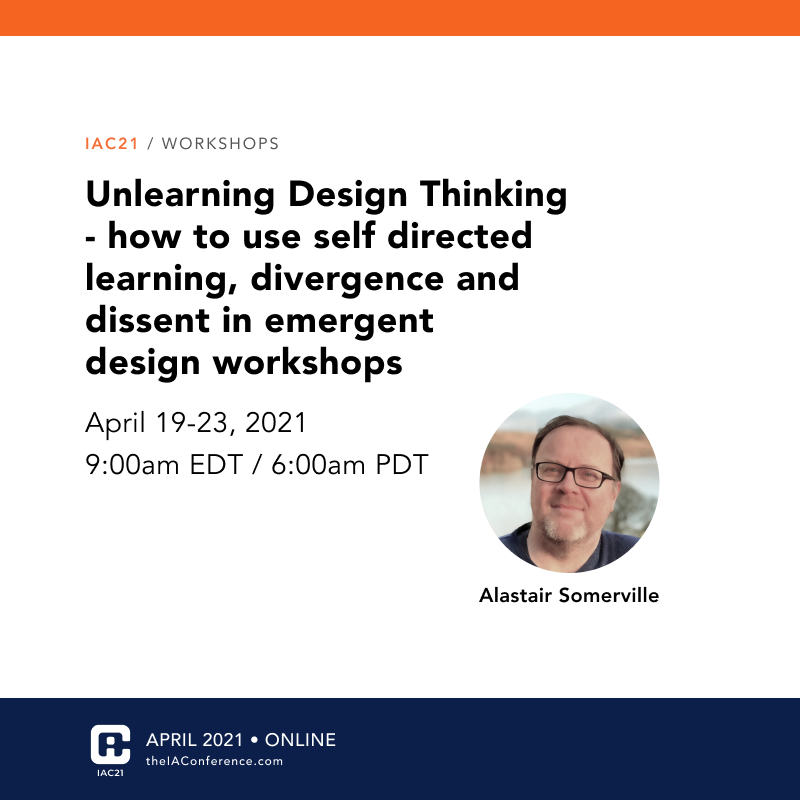
How do we design for divergence when our tools value convergence? How can we design for complexity and emergence when our workshops simplify and normalise? Unlearning Design Thinking is a workshop to identify what is wrong and to experiment with new ways of working together. With three themes, Direction, Divergence and Dissent, spend time with other people understanding how many alternative methods exist and learning which ones are relevant to your contexts and your personal skill set. With two workshops and three encounters, plus podcast-style learning packages, you will discover how to work with tools that invert established design thinking ideals to help you and your colleagues work creatively with emergent design.
Come along and unlearn some ideas to enable new ideas of supporting creative thinking, divergence and dissent.
Sessions will be recorded and made available to registered attendees.
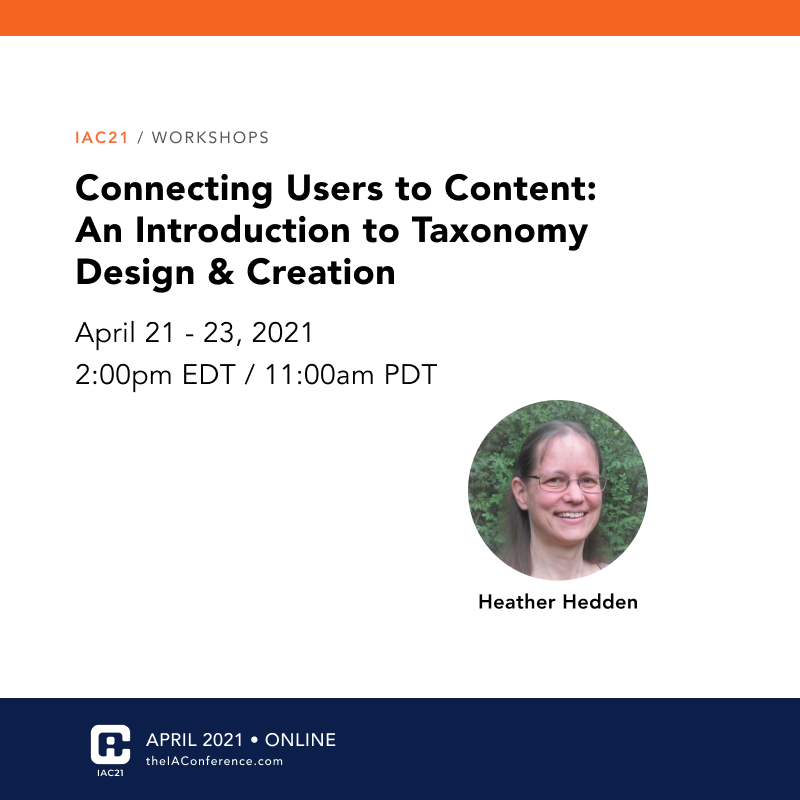
Taxonomies have evolved from classification systems to adaptable interactive tools to link users to desired content on websites, intranets, and web applications. Taxonomies are not the same as a website’s navigation and can do a lot more. Taxonomies can provide guiding categories of topics, suggested search terms, aspects for faceted search, or topics for sorting and filtering results. To be truly helpful, however, taxonomies need to be well designed to suit the users and use cases, be customized to the content, and conform to taxonomy best practices and standards so that they are easy and intuitive to use.
This workshop teaches taxonomy creation principles and addresses the issues of designing a taxonomy to serve users. It presents best practices in designing taxonomies, including the principles of wording of terms, incorporating synonyms, creating relationships between terms, and designing hierarchies and facets. Other topics include taxonomy project planning, sources for terms, and taxonomy testing. The workshop will also include practical exercises and access to taxonomy management software.
As IAs we’re fond of taking the “human-centered” approach, which involves bringing in the human perspective to all steps of the problem-solving process. Whether we are talking to customers or co-creating solutions with users, this frame of mind allows us to bring forth products and services that serve human needs and goals.
The thing is, the understanding two humans can reach in a matter of minutes is tough to replicate in digital products. No matter what any AI expert says, no commercial technology that exists today can substitute having a conversation with another human. And, no matter how human-centered we get, we’re still designing for bits and pixels. Digital products are still digital.
However, we IAs aim to design these digital places to meet human needs, goals, and motivations. The question we often ask ourselves is, can we make the digital worlds we design more human spaces?
The answer we’ve come up with is that we need to design experiences where the digital spaces shapeshift to approximate an in-person conversation to the best of their abilities (and without a chatbot) given the limitations of the medium. We need to think about navigation differently. Most importantly, we need to design for customer intentions.
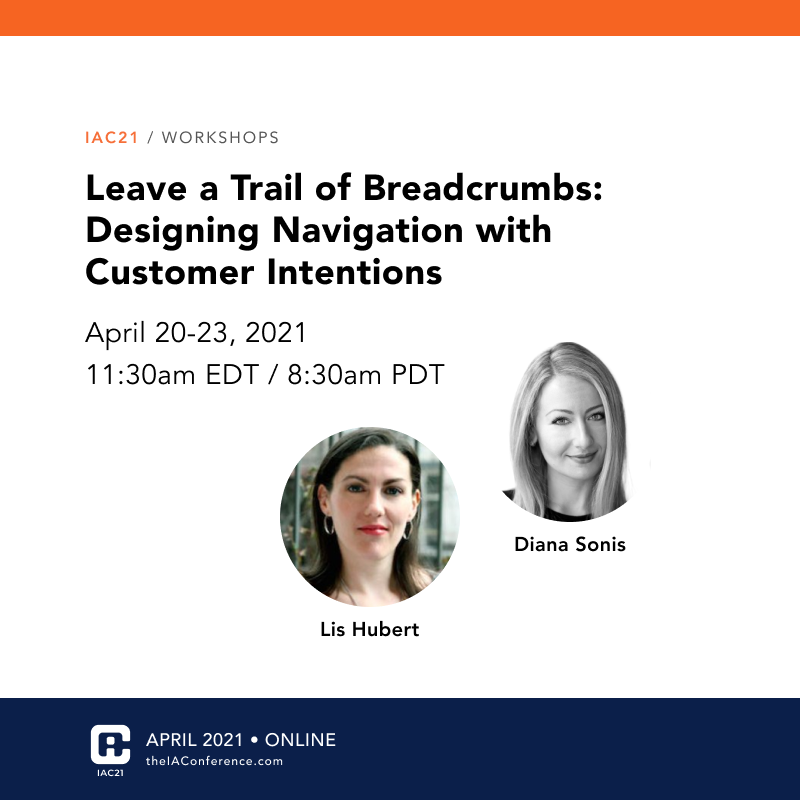
In this session, Lis & Diana will cover why designing for customer intentions throughout your digital ecosystem empowers your team to build a bridge between what customers need and what your business provides. We’ll then dive into the details of how to use the method.
You'll leave with an expanded perspective and a new tool for your IA toolbox.
Come ready to dive in!
Sessions will be recorded and made available to registered attendees.
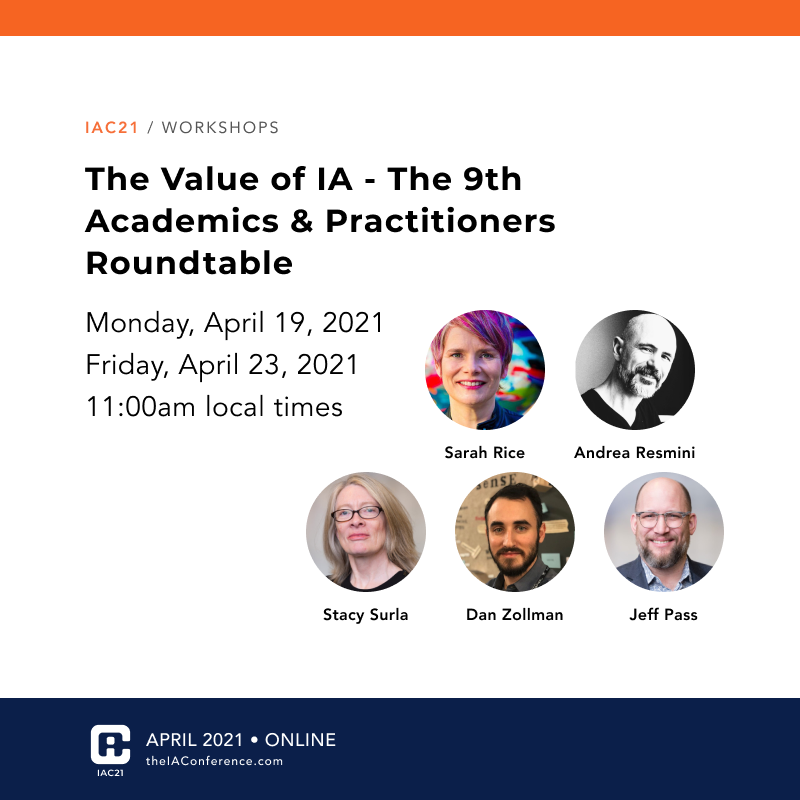
Roundtable framing: The 9th Academics & Practitioners Roundtable welcomes information architecture practitioners and academics of all levels of experience as well as anyone from IA-adjacent or IA-overlapping fields. The Roundtable’s unique value proposition lies in its diversity of its participants and how it drives discussions of how information architecture continues to evolve as a discipline and profession.
2021 Theme: The Value of IA.
Information architecture has evolved to think broadly about designing information ecosystems. IAs play a vast and pervasive role in daily life, social structure, and the organization of economic and political power. And yet we still need, and struggle to be able to explain what information architecture is and what its value is.
If IA practitioners and academics aim to demonstrate the value of their work and improve the wellbeing of human beings surrounded by and immersed in information systems, there are critical questions they must answer:
What is the value of IA in society, present and future? Specifically, what is the value of IA as a discipline?
What narratives do we share in our IA communities about our origins, purpose, and value? What are the limitations of those narratives?
How can we redirect conversations about economic value or "return on investment" (ROI) toward a broader, more meaningful range of human values?
What concepts or vocabulary can we use in order to explain the value of information architecture to our colleagues, clients, and communities?
This workshop sets out to address these questions and to clarify the ‘Value of IA’. The multi-day Roundtable is open to anyone with an interest in IA and continues the Roundtable’s tradition of gathering practitioners, researchers, and educators of all levels of expertise and from around the world to discuss critical aspects of our discipline and share what is discussed with the broader IA community.
Day 1 consists of framing presentations, a series of lightning talks, group activities and discussion. Day 2 consists of asynchronous group make-a-thons aimed at developing artifacts capturing, summarizing, or developing the outputs of Day 1. Day 3 concludes with group presentations of their outputs and synthesis.
To learn more about the Information Architecture Roundtable and the themes for the previous eight roundtables, visit https://www.iaroundtable.org/.
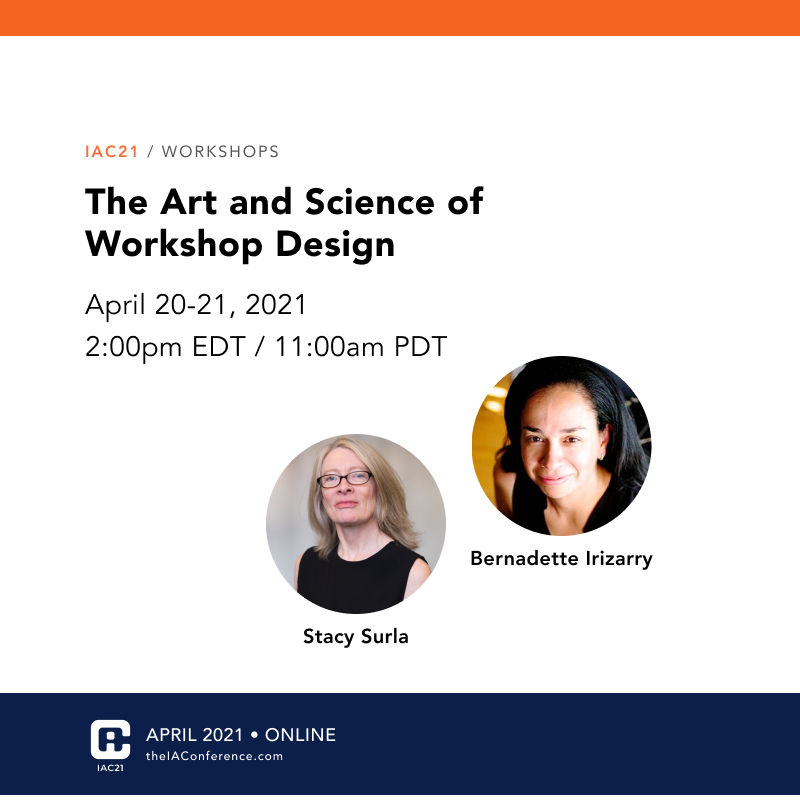
A well-designed workshop is an excellent, people-centered way to get work done. Whether it's a participatory session that replaces a standard meeting, or a full-blown, multi-day experience, workshops get teams and clients to explore options, analyze alternatives, and come to consensus.
But successful workshops don't happen by accident. They’re time- and resource-intensive to plan and deliver, and require particular skills and knowledge. UX practitioners are uniquely positioned to develop and facilitate excellent workshop experiences. However, workshop approaches and how-tos aren’t often taught in school or on the job. Furthermore, in today's still-telescoping timeline for necessary social distancing, the ability to facilitate work getting done through collaborative online sessions is more important than ever.
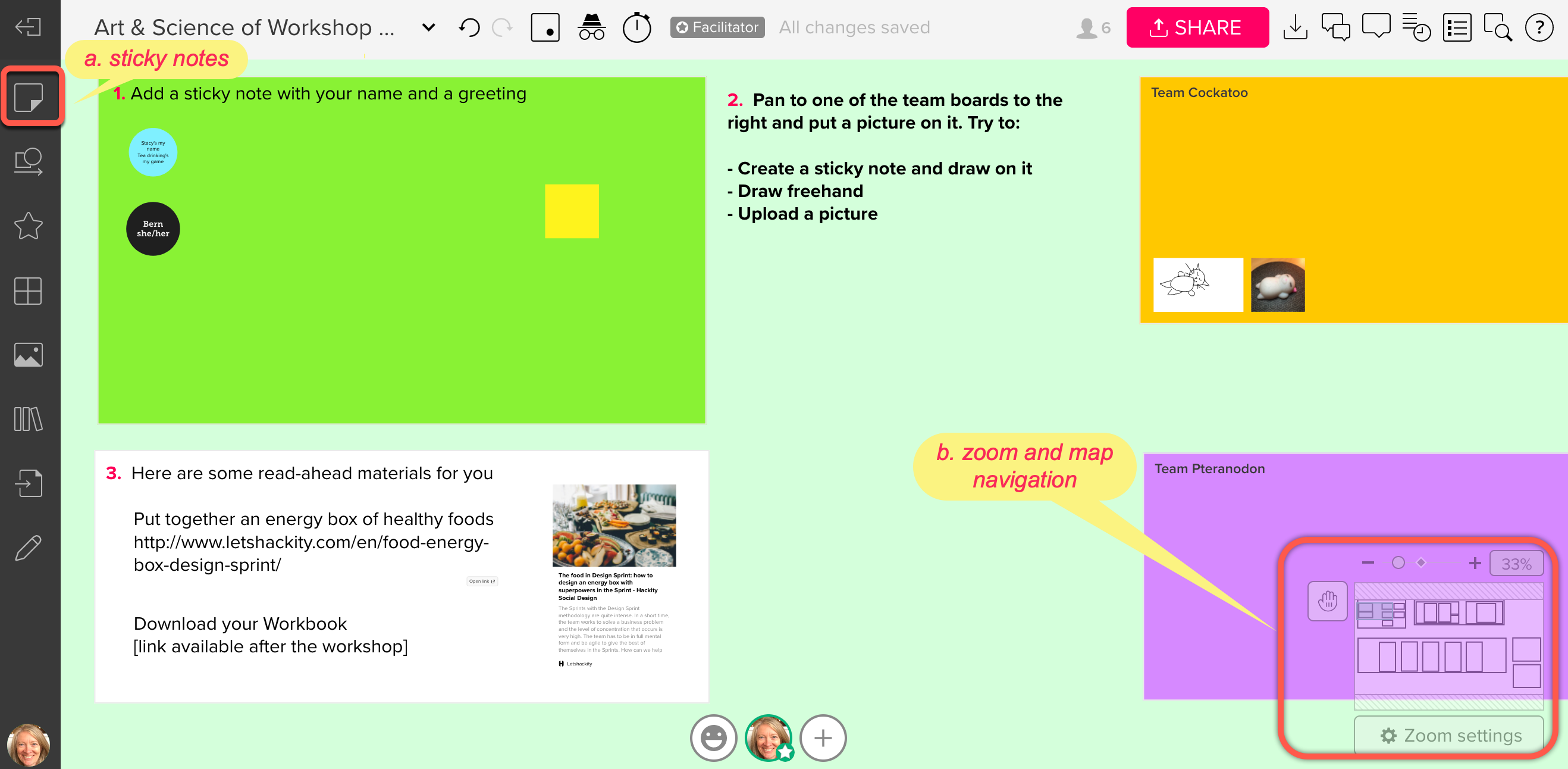
The Art and Science of Workshop Design gives participants a flexible framework for building and facilitating workshops. Starting with the foundations of workshop design and delivery, participants will learn how to leverage design thinking methods to create collaborative sessions that are fun and effective. They will explore design activities, tools, and techniques, and develop their unique facilitator’s stance. Participants will have the hands-on opportunity to create and practice leading an exercise, and will leave with a customized Action Plan to take the next step - which may be leading a working session on the job or delivering a workshop at a future conference.
The workshop is itself structured as a template that models and demonstrates workshop design. The presenters will peel back the layers of each component to show how it has been built, how it contributes to workshop goals, and how it can be adapted to different types of meetings and groups. This layering also enables the workshop to offer value to participants at all levels of experience: the foundations and main components of workshop design will be made clear for beginners, and each topic and activity can be engaged at either higher or deeper levels.
Participants will receive a workbook that they will use throughout the day and which will be a valuable resource as they plan and carry out their own workshop sessions. Workshop boxes will be sent to advance registrants, while downloadable materials (followed up by shipped workshop boxes) will be provided for last-minute participants.
Topic highlights include:
The narrative arc of a workshop
Establishing the participation contract
Deep dive into roles and skills (vision, logistics, activity design, facilitation)
Adapting and creating workshop exercises
Managing participation (opening and closing the "fourth wall," engaging all voices, handling challenging personas)
Well-Being in the workshop (healthy snacks, physical movement, centering)
Creating an action plan for your own next workshop
Sessions will be recorded and made available to registered attendees.